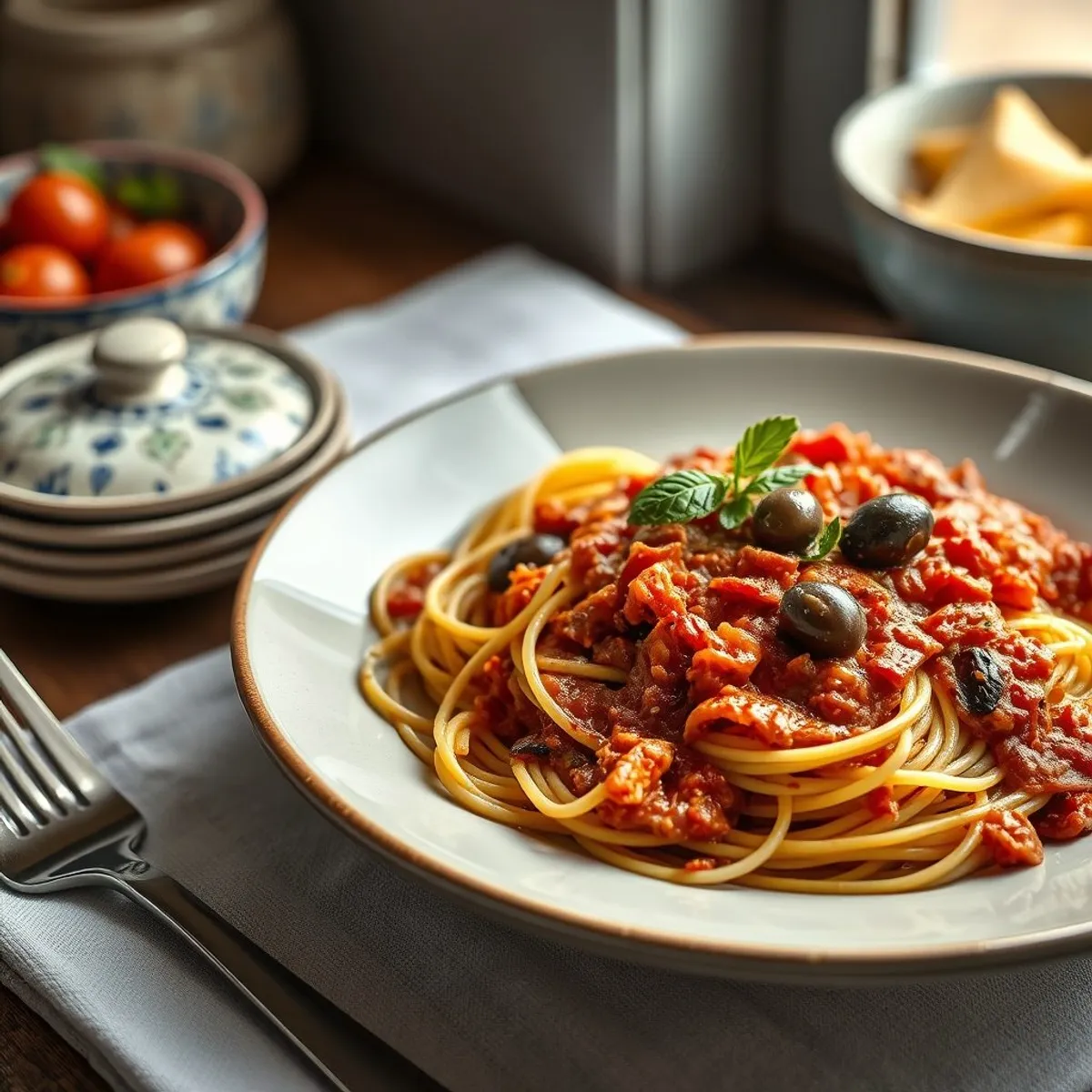
AI-generated photo.
Italian · Signature, Campania · Italy
Puttanesca
Puttanesca (puttanesca), a Campania dish from Italy.
Pai editors’ mark 5 / 5
Plan, list, and collections
Puttanesca is cooked in Campania as its own plate, not as a copy of a restaurant menu. Melt the anchovy into olive oil with garlic, then simmer tomato, olives, and capers into a sharp sauce and toss the pasta through it. Amounts are for 4 from foods this library can count.
Health
How this plate sits
Counted from the ingredient table. The score, richness, and badges describe one serving as written. The ring and the nutrient table follow the serving count above. This is general information, not medical advice.
73
Health score
Light & nourishing
Moderate
Richness
Light
Light to very rich, from fat, saturated fat, sugar, and the cream or butter in the plate.
- Protein 13%
- Carbs 68%
- Fat 19%
Watch · Diabetes-friendly
It misses a gentler mark: sugar, fiber, the starch mix, or the richness of the plate.
Watch · Heart-friendly
Saturated fat, cholesterol, sodium, or fiber keeps this off the heart-friendly list.
Watch · Weight loss
Calories, protein, or richness make this a fuller plate than a light day wants.
Watch · High protein
Protein is about 13.3 g, under the 25 g mark.
Watch · Low sodium
About 926 mg of sodium, above the 450 mg mark.
Watch · Gluten-free
Wheat or gluten is in the required list.
Suits · Dairy-free
No milk ingredients in the required list.
Watch · Vegetarian
Meat, poultry, fish, or shellfish is in the required list.
Suits · Pregnancy
No alcohol, liver, or caffeine in the required list. Cook meat, eggs, and seafood through.
Watch · Gentle when sick
The heat is more than a gentle bowl wants.
Watch · Kid-friendly
The heat is above a mild mark.
Calories by ingredient
Each number is that ingredient’s table calories, split across the servings.
- Dry spaghetti297 kcal
- Olive oil35 kcal
- Kalamata olive27 kcal
- Canned crushed tomato26 kcal
- Anchovy11 kcal
- Garlic3 kcal
Glycemic load
Estimated glycemic load for this count: 48.9. The bands come from the ingredient table.
Portion
One serving, as written, is about 402 kcal.
Allergens. Fish, Gluten, Wheat
Make it healthier
Use half the salt
Salt adds no calories in this table, so the calorie figure stays put while sodium falls.
About 402 kcal after the change.
Use half the kosher salt and finish with citrus or vinegar.
The same plate with less sodium. This is the kitchen note. A new calorie figure is shown only when the grams can be replayed on the ingredient table.
Low confidence: no new calorie figure. The grams cannot be replayed on the table.
Swap the main ingredient for the same weight of firm tofu or chickpeas when you want a meatless pot.
The seasoning and the method stay. This is the kitchen note. A new calorie figure is shown only when the grams can be replayed on the ingredient table.
Low confidence: no new calorie figure. The grams cannot be replayed on the table.
| Nutrient | Amount | % daily value |
|---|---|---|
| Calories | 402 kcal | 20% |
| Protein | 13.3 g | 27% |
| Carbohydrate | 68.5 g | 25% |
| Fiber | 4.4 g | 16% |
| Total sugars | 5.8 g | 12% |
| Fat | 8.4 g | 11% |
| Saturated fat | 1 g | 5% |
| Cholesterol | 4 mg | 1% |
| Sodium | 926 mg | 40% |
| Potassium | 446 mg | 9% |
| Calcium | 69 mg | 5% |
| Iron | 4.9 mg | 27% |
| Magnesium | 64 mg | 15% |
| Zinc | 1.5 mg | 14% |
| Vitamin A | 23 mcg | 3% |
| Vitamin C | 11.7 mg | 13% |
| Vitamin D | 0.1 mcg | 1% |
| Vitamin E · estimate | 1.8 mg | 12% |
| Vitamin K · estimate | 51 mcg | 43% |
| Thiamin (B1) | 0.8 mg | 63% |
| Riboflavin (B2) | 0.4 mg | 31% |
| Niacin (B3) | 11.1 mg | 69% |
| Vitamin B6 · estimate | 0.1 mg | 5% |
| Folate · estimate | 200 mcg | 50% |
| Vitamin B12 | 0 mcg | 2% |
Low-confidence marks sit on glycemic load or on vitamins the USDA row left blank. Those vitamins are filled from a food-group reference and labeled as estimates. Reported USDA values, including zeros, are kept. 50 g is the daily value for added sugar. This figure is total sugar, including fruit and milk.
- A serving stays under about 420 calories, so it can sit inside an ordinary day.
- Sodium is on the higher side. The swaps below pull it down.
- Much of the energy comes from a fast starch such as white rice, white flour, or sugar.
- Fish here is a commonly eaten, lower-mercury choice when fully cooked. Follow your own pregnancy fish guidance.
Pai shares general nutrition information for everyday cooking. It is not medical advice, a diagnosis, or a treatment plan. Health labels are estimates from reference ingredient data and do not account for your lab results, medications, or how a food is absorbed. If you are pregnant, managing diabetes, cholesterol, an allergy, or any illness, use this as a menu of ideas and follow the clinician who knows you. In an emergency, call local emergency services.
Equipment
- Heavy pot
- Scale
- Wooden spoon
- Ladle
Ingredients
Each line is stored in grams. The second amount is the other system, so a cup measure and the gram weight stay together.
 Dry spaghetti12 oz320 g
 Canned crushed tomato1 can400 g
 Kalamata olive0.33 cup60 g
 Capers2 tbsp20 g
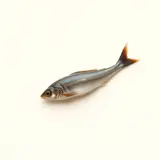 Anchovy4 fillets20 g
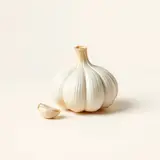 Garlic3 cloves9 g
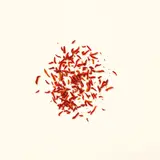 Chili flakes0.5 tsp2 g
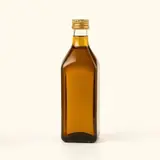 Olive oil1 tbsp17.58 ml
 Flat-leaf parsley0.25 cup8 g
 Kosher salt0.5 tsp3 g
The first amount follows the unit toggle. The second is the other system. Both follow the serving count.
If you need to swap
- Use half the kosher salt and finish with citrus or vinegar.. The same plate with less sodium.
- Swap the main ingredient for the same weight of firm tofu or chickpeas when you want a meatless pot.. The seasoning and the method stay.
Method
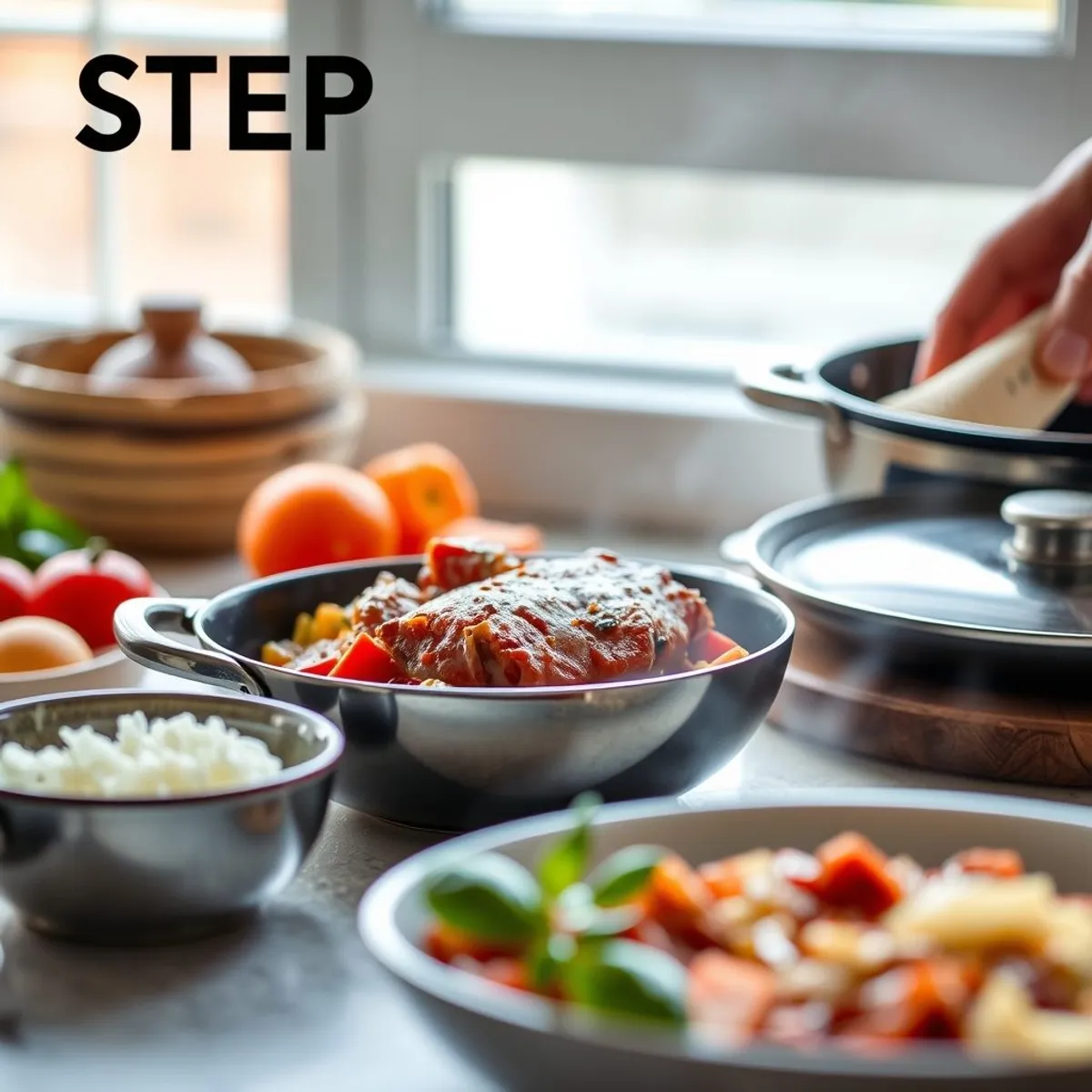
AI-generated photo.
1Set out a scale and the equipment for Puttanesca. Heat to a quiet simmer, about 195°F / 90°C and give it 5 minutes so the surface is actually hot. Weigh dry spaghetti, canned crushed tomato, kalamata olive, capers, anchovy, garlic, chili flakes, olive oil, flat-leaf parsley, kosher salt. Puttanesca is cooked in Campania as its own plate, not as a copy of a restaurant menu. Melt the anchovy into olive oil with garlic, then simmer tomato, olives, and capers into a sharp sauce and toss the pasta through it. Amounts are for 4 from foods this library can count.
Heat 5 min
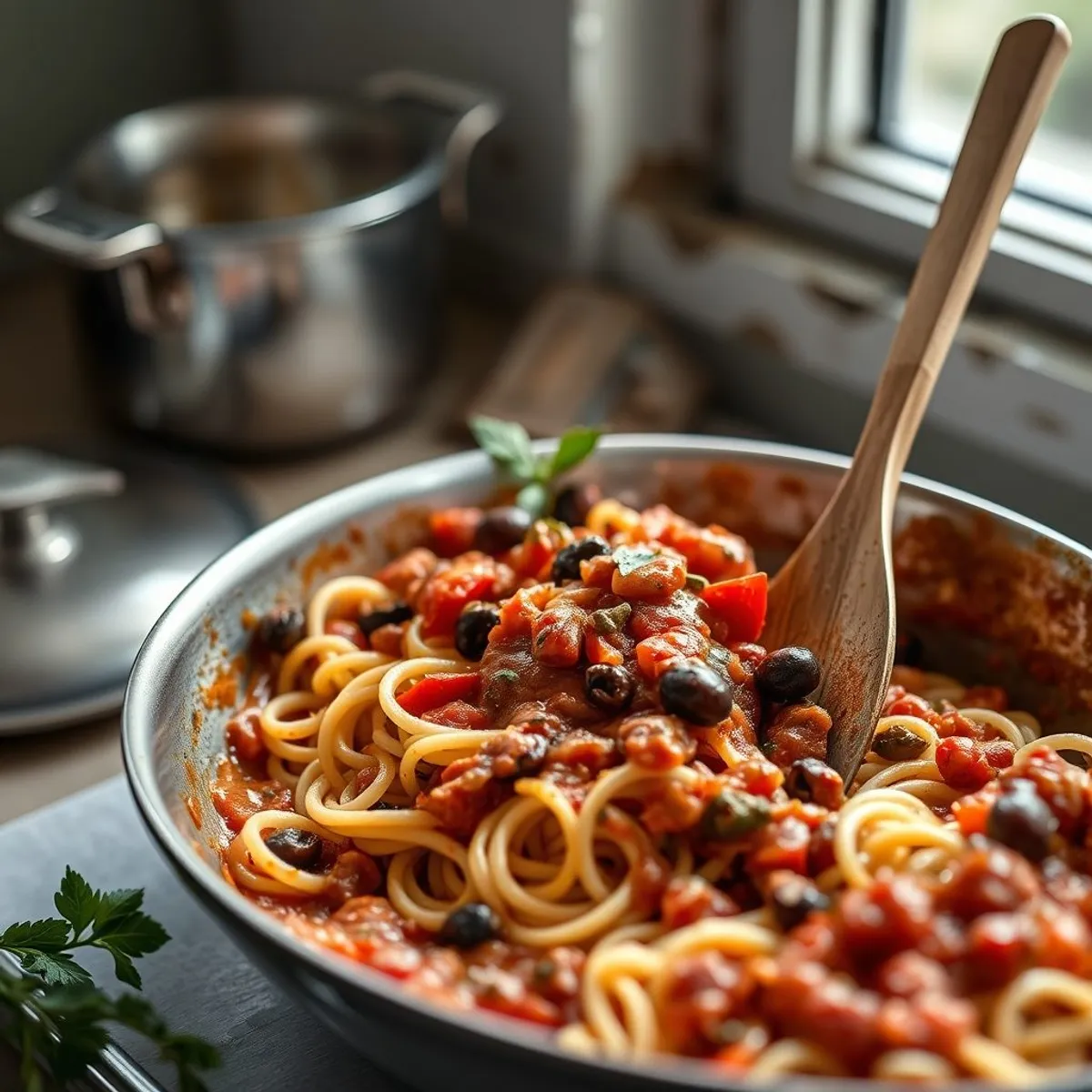
AI-generated photo.
2Puttanesca is cooked in italy. Skim the foam once, then stop stirring so the broth stays clear.
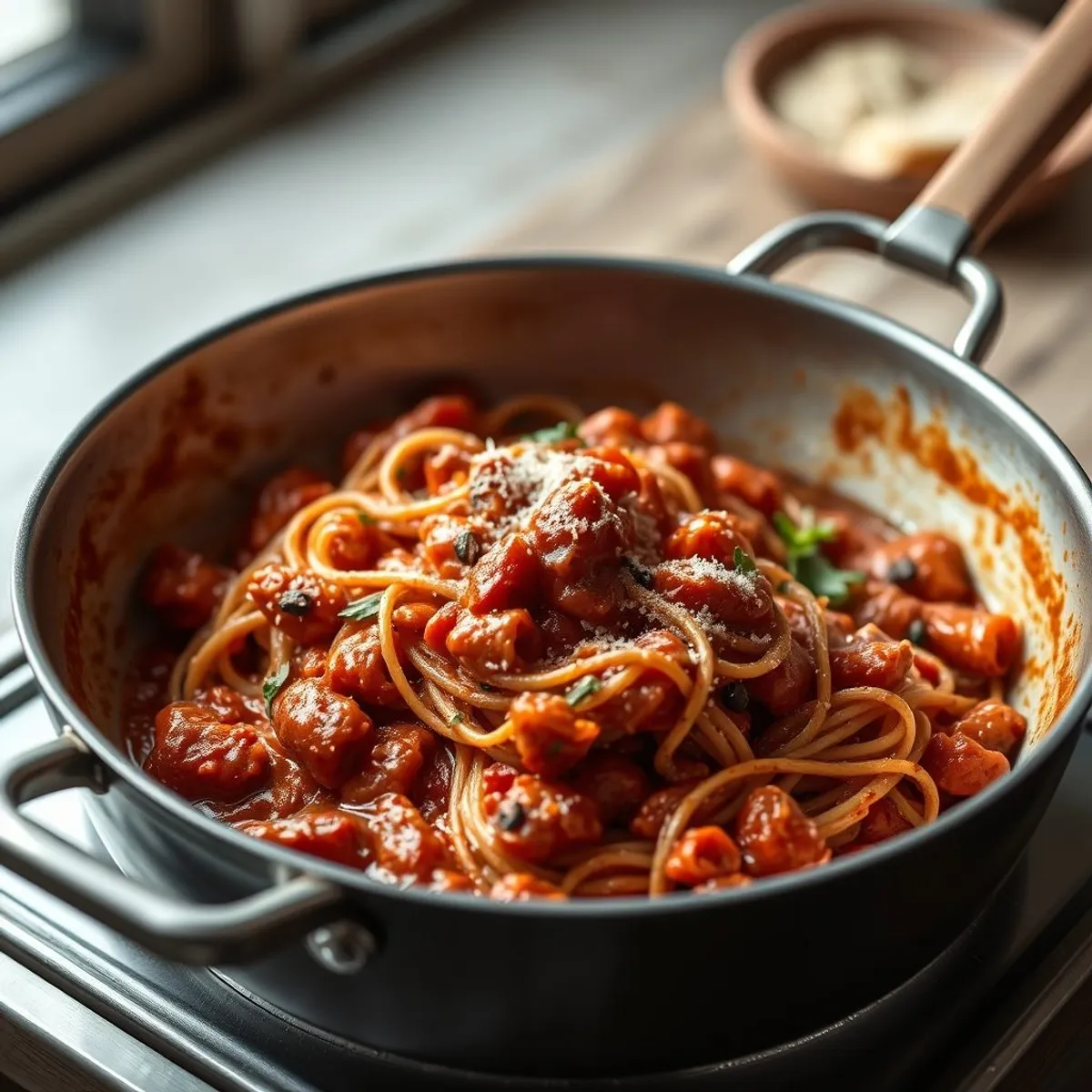
AI-generated photo.
3Cook the aromatics first, then the main ingredient for Puttanesca, until the edges take a little color. Add the herb at the end so it stays green and fragrant.
Build the base
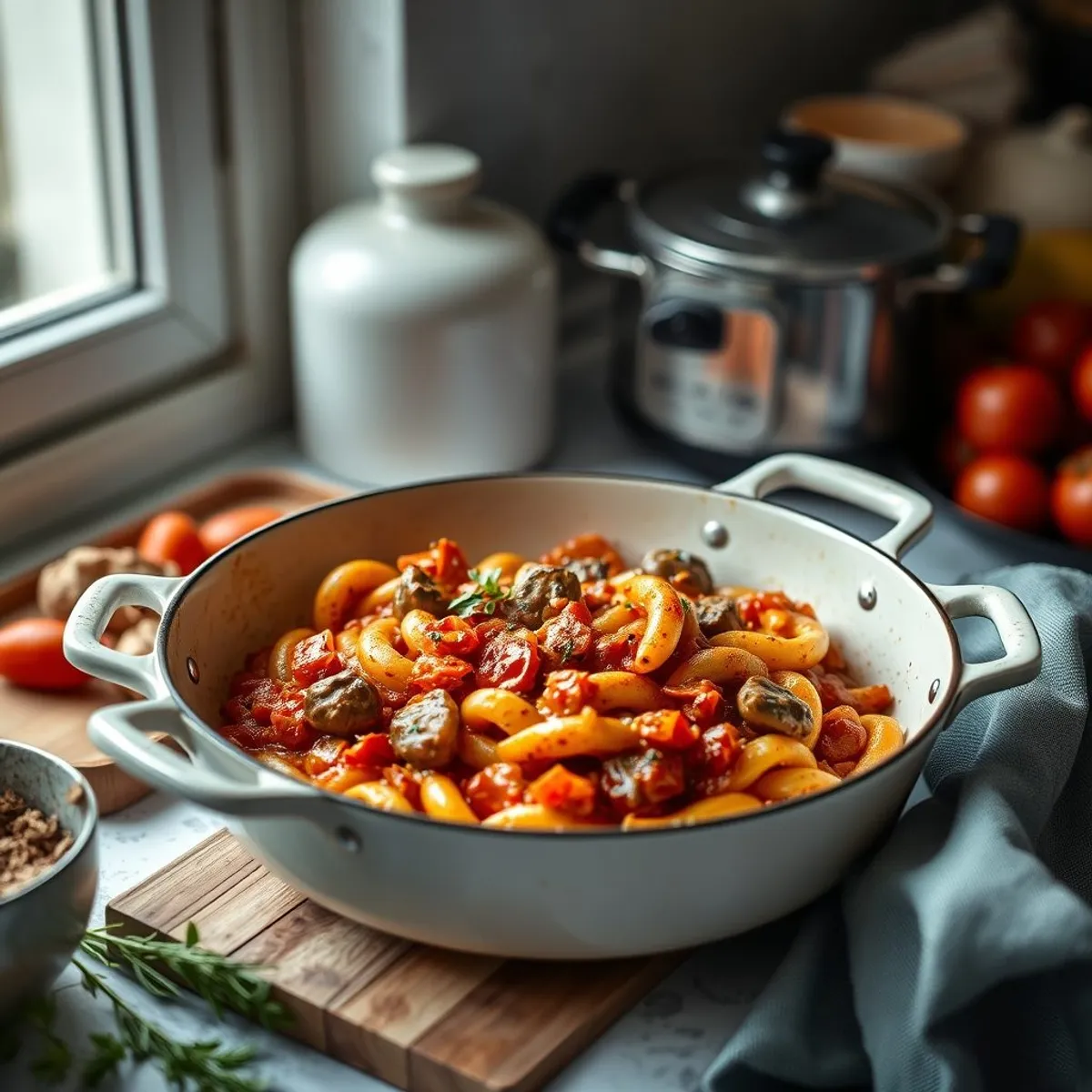
AI-generated photo.
4Add the remaining weighed foods and cook Puttanesca at a quiet simmer, about 195°F / 90°C. Start checking at 27 minutes. Puttanesca is done when the thickest piece yields to a fork and the liquid is quiet, not at a hard boil.
Simmer 27 min
- 🇮🇹 ItalySouthern Europesig-italy-puttanesca-step-4
Puttanesca, step 5
Step 5 · Puttanesca
5Check the center of Puttanesca, not the edge. If the cue is not true yet, give it a few more minutes and look again. Opening a lid or an oven door early drops the heat.
- 🇮🇹 ItalySouthern Europesig-italy-puttanesca-step-5
Puttanesca, step 6
Step 6 · Rest 5 min
6Rest Puttanesca for 5 minutes, then taste and adjust the salt. Serve it in the way it is eaten in italy, with the sauce or garnish that belongs to it. Film Puttanesca in this shot order and no other: scale and bowls in a flat lay; the sauce coating a spoon; a skewer pulled from the center; citrus cut and squeezed off heat. Slate words for the editor: whisked, luster, amber, marble, zephyr, mortar, bronzed, shimmer, hearthside, undercrust.
Rest 5 min
How you know it is done
Puttanesca is done when the thickest piece yields to a fork and the liquid is quiet, not at a hard boil.
If it goes wrong
- Puttanesca looks done at the edge and is still raw in the center. Trust the cue, not the color. Check the thickest piece and give it a few more minutes.
- Puttanesca turned out salty, dry, or watery. Weigh the salt and the liquid next time. Keep the heat at the temperature in the method, and stop when the doneness cue appears.
Storage
Cool Puttanesca, then cover and refrigerate for up to 3 days. Freeze portions for a month if the dish reheats in a pot or oven. Reheat leftovers until steaming.
How this dish helps your daily life
- Puttanesca belongs to Campania. The method above is the one that makes it recognizable.
- Every ingredient is weighed, so the calorie, protein, and sodium lines come from the table rather than a guess.
Notes
Pregnancy. Cook meat, poultry, eggs, and seafood through. Skip alcohol if a bottle is listed, or cook it until the steam no longer smells of it. There is no raw-fish step.
From the kitchen. Melt the anchovy into olive oil with garlic, then simmer tomato, olives, and capers into a sharp sauce and toss the pasta through it.
Allergens in the required list: Fish, Gluten, Wheat.
Your stars and note
Pai shares general nutrition information for everyday cooking. It is not medical advice, a diagnosis, or a treatment plan. Health labels are estimates from reference ingredient data and do not account for your lab results, medications, or how a food is absorbed. If you are pregnant, managing diabetes, cholesterol, an allergy, or any illness, use this as a menu of ideas and follow the clinician who knows you. In an emergency, call local emergency services.