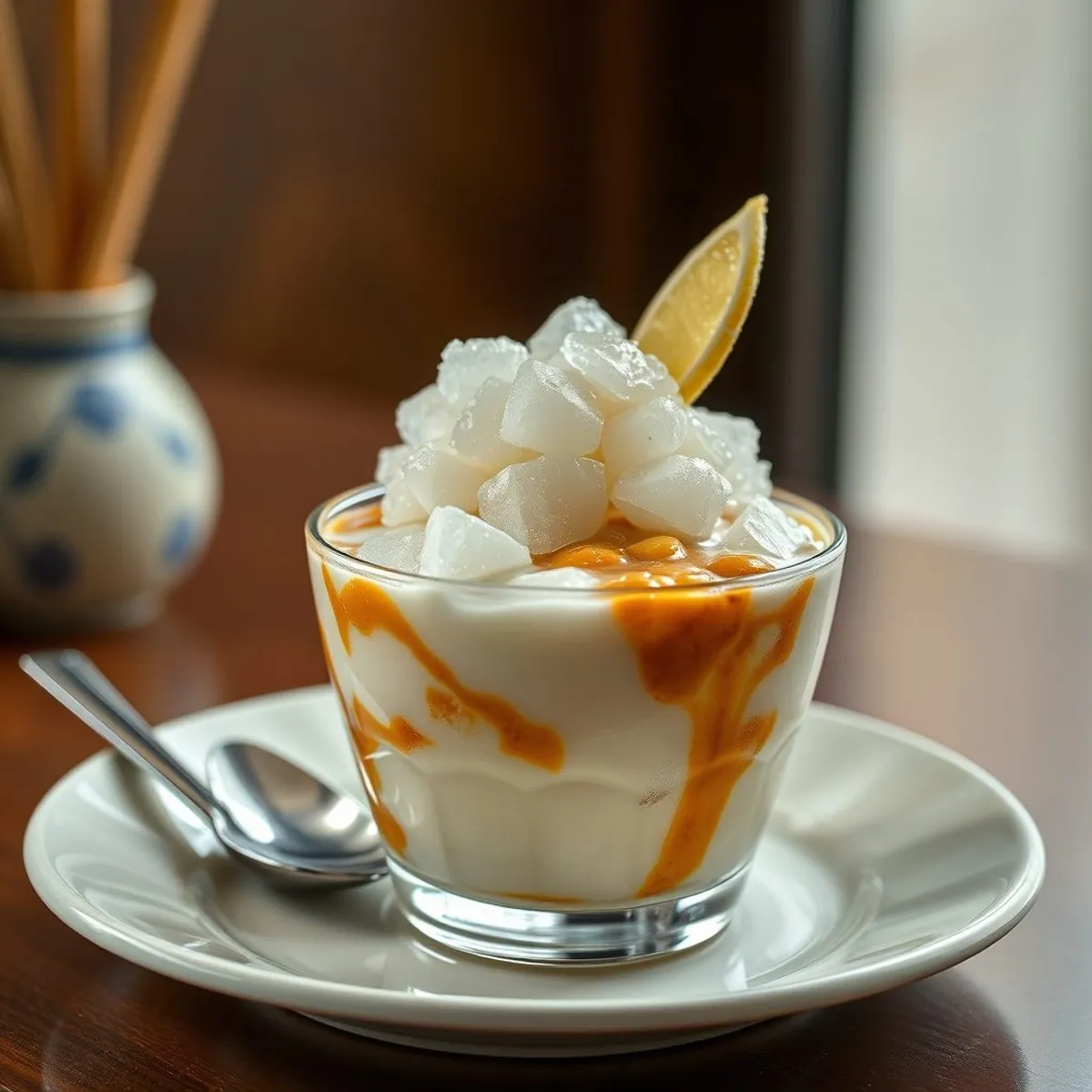
AI-generated photo.
Filipino · Iconic, Manila · Philippines
Halo-halo
Halo-halo (halo-halo), a Manila plate from Philippines.
Pai editors’ mark 5 / 5
Plan, list, and collections
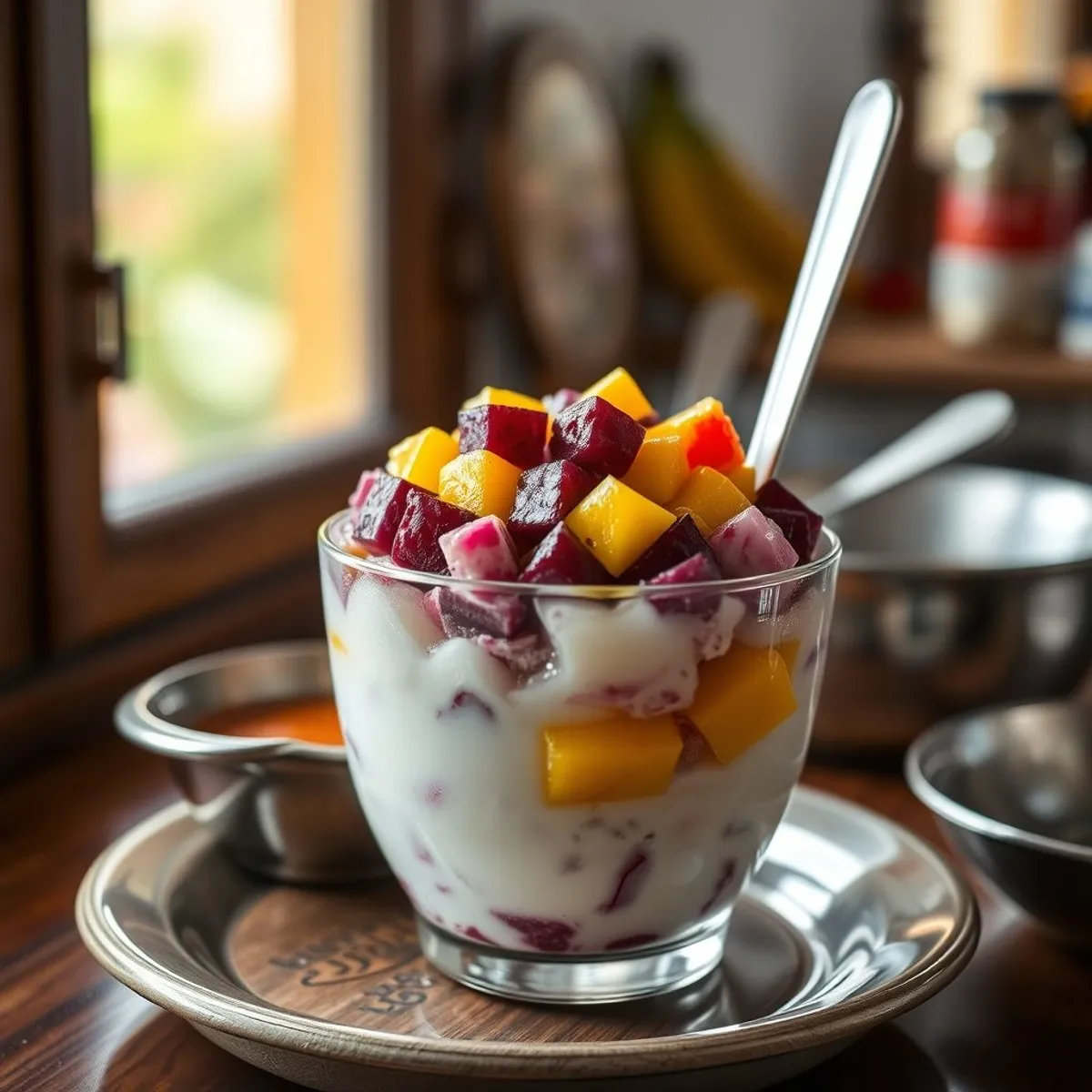
Halo-halo is cooked in Manila as its own plate, not as a copy of a restaurant menu. Sweeten cooked mung bean, then layer it with fruit, ice, and condensed milk. Purple yam is the usual color. Mango and jackfruit carry the fruit here. Amounts are for 4 from foods this library can count.
Health
How this plate sits
Counted from the ingredient table. The score, richness, and badges describe one serving as written. The ring and the nutrient table follow the serving count above. This is general information, not medical advice.
72
Health score
Rich, enjoy occasionally
Indulgent
Richness
Balanced
Light to very rich, from fat, saturated fat, sugar, and the cream or butter in the plate.
- Protein 11%
- Carbs 58%
- Fat 31%
Watch · Diabetes-friendly
It misses a gentler mark: sugar, fiber, the starch mix, or the richness of the plate.
Watch · Heart-friendly
Saturated fat, cholesterol, sodium, or fiber keeps this off the heart-friendly list.
Watch · Weight loss
Calories, protein, or richness make this a fuller plate than a light day wants.
Watch · High protein
Protein is about 7.4 g, under the 25 g mark.
Suits · Low sodium
About 364 mg of sodium, under the 450 mg mark.
Suits · Gluten-free
No wheat, barley, or rye in the required list. Still read labels on sauces and oats.
Watch · Dairy-free
A milk ingredient is in the required list.
Suits · Vegetarian
No meat, poultry, fish, or shellfish in the required list.
Suits · Pregnancy
No alcohol, liver, or caffeine in the required list. Cook meat, eggs, and seafood through.
Watch · Gentle when sick
Fat or sugar is high for a day when appetite is low.
Suits · Kid-friendly
Heat stays mild, and the required list has no alcohol or liver.
Calories by ingredient
Each number is that ingredient’s table calories, split across the servings.
- Dry mung beans69 kcal
- Sweetened condensed milk64 kcal
- Fresh coconut35 kcal
- Olive oil31 kcal
- Banana22 kcal
- Mango14 kcal
Glycemic load
Estimated glycemic load for this count: 20.1. The bands come from the ingredient table.
Portion
One serving is about 254 kcal. Two portions would be about 508 kcal if you want a fuller plate.
Allergens. Milk
Make it healthier
Serve three-quarters of the plate
The ingredient mix stays the same. Calories are three-quarters of the counted serving.
About 191 kcal after the change.
Use half the kosher salt and finish with citrus or vinegar.
The same plate with less sodium. This is the kitchen note. A new calorie figure is shown only when the grams can be replayed on the ingredient table.
Low confidence: no new calorie figure. The grams cannot be replayed on the table.
Serve three-quarters of the plate.
The seasoning stays. The calories fall with the portion. This is the kitchen note. A new calorie figure is shown only when the grams can be replayed on the ingredient table.
Low confidence: no new calorie figure. The grams cannot be replayed on the table.
| Nutrient | Amount | % daily value |
|---|---|---|
| Calories | 254 kcal | 13% |
| Protein | 7.4 g | 15% |
| Carbohydrate | 38.3 g | 14% |
| Fiber | 5.7 g | 20% |
| Total sugars | 21.1 g | 42% |
| Fat | 9.1 g | 12% |
| Saturated fat | 4.5 g | 23% |
| Cholesterol | 7 mg | 2% |
| Sodium | 364 mg | 16% |
| Potassium | 441 mg | 9% |
| Calcium | 90 mg | 7% |
| Iron | 1.7 mg | 9% |
| Magnesium | 52 mg | 12% |
| Zinc | 0.7 mg | 6% |
| Vitamin A · estimate | 23 mcg | 3% |
| Vitamin C · estimate | 51.4 mg | 57% |
| Vitamin D | 0 mcg | 0% |
| Vitamin E · estimate | 0.9 mg | 6% |
| Vitamin K | 4 mcg | 3% |
| Thiamin (B1) | 0.1 mg | 12% |
| Riboflavin (B2) | 0.2 mg | 13% |
| Niacin (B3) | 0.8 mg | 5% |
| Vitamin B6 | 0.2 mg | 13% |
| Folate · estimate | 142 mcg | 36% |
| Vitamin B12 · estimate | 0.1 mcg | 5% |
Low-confidence marks sit on glycemic load or on vitamins the USDA row left blank. Those vitamins are filled from a food-group reference and labeled as estimates. Reported USDA values, including zeros, are kept. 50 g is the daily value for added sugar. This figure is total sugar, including fruit and milk.
- A serving stays under about 420 calories, so it can sit inside an ordinary day.
- Sugars are noticeable. A smaller portion changes the day.
- Sodium stays in a comfortable range.
Pai shares general nutrition information for everyday cooking. It is not medical advice, a diagnosis, or a treatment plan. Health labels are estimates from reference ingredient data and do not account for your lab results, medications, or how a food is absorbed. If you are pregnant, managing diabetes, cholesterol, an allergy, or any illness, use this as a menu of ideas and follow the clinician who knows you. In an emergency, call local emergency services.
Equipment
- Scale
- Mixing bowl
- Sharp knife
Ingredients
Each line is stored in grams. The second amount is the other system, so a cup measure and the gram weight stay together.
 Ice2 cups200 g
 Sweetened condensed milk0.33 cup62 ml
 Dry mung beans0.4 cup80 g
 Young jackfruit, canned0.5 cup80 g
 Fresh coconut0.33 cup40 g
 Banana1 banana100 g
 Mango0.5 mango80 g
 Lychee6 lychees60 g
 Kosher salt0.5 tsp3 g
 Olive oil1 tbsp15.38 ml
The first amount follows the unit toggle. The second is the other system. Both follow the serving count.
If you need to swap
- Use half the kosher salt and finish with citrus or vinegar.. The same plate with less sodium.
- Serve three-quarters of the plate.. The seasoning stays. The calories fall with the portion.
Method
AI-generated photo.
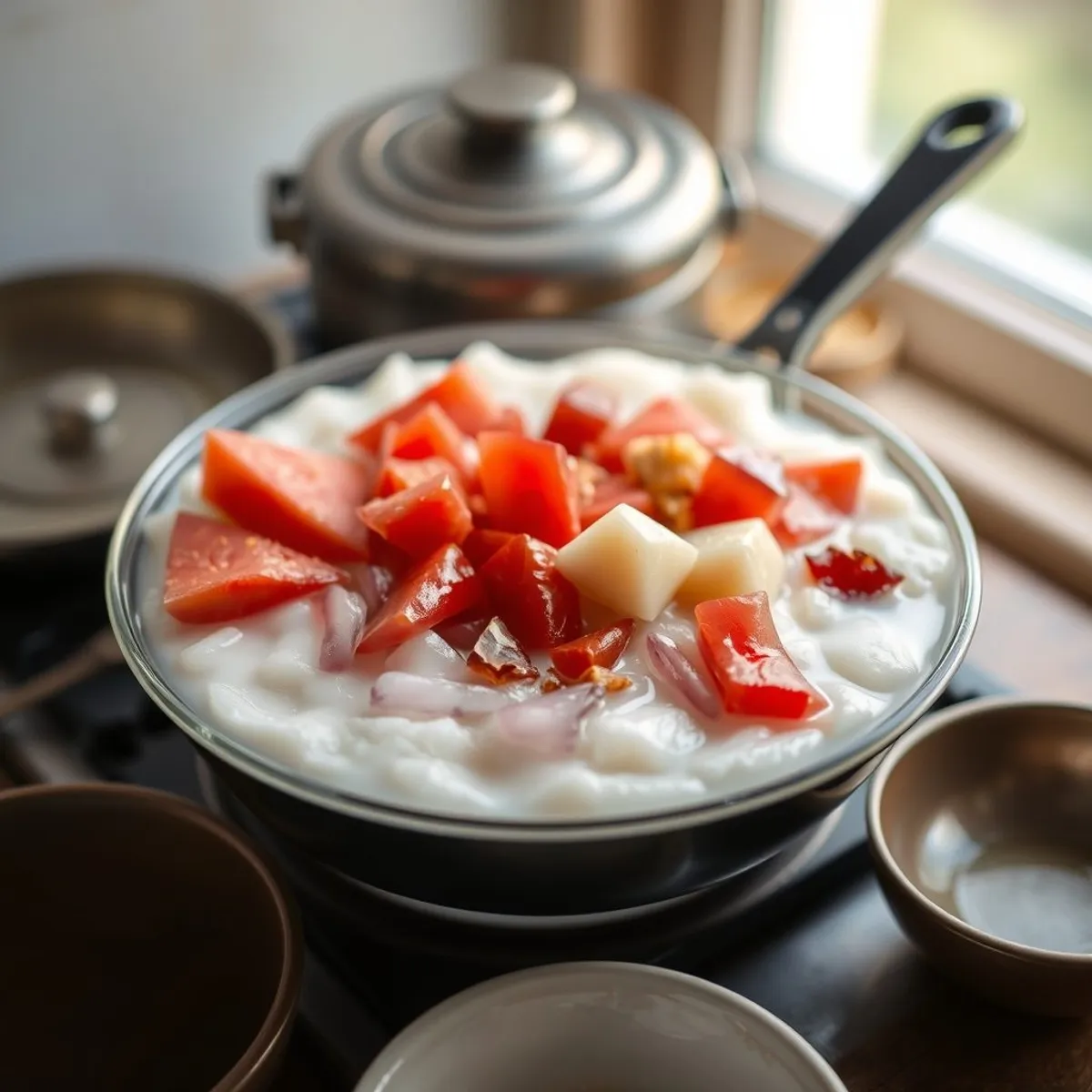
1Set out a scale and the equipment for Halo-halo. Heat to the refrigerator at 40°F / 4°C and give it 5 minutes so the surface is actually hot. Weigh ice, sweetened condensed milk, dry mung beans, young jackfruit, canned, fresh coconut, banana, mango, lychee, kosher salt, olive oil. Halo-halo is cooked in Manila as its own plate, not as a copy of a restaurant menu. Sweeten cooked mung bean, then layer it with fruit, ice, and condensed milk. Purple yam is the usual color. Mango and jackfruit carry the fruit here. Amounts are for 4 from foods this library can count.
Heat 5 min
AI-generated photo.
2Halo-halo is cooked in philippines. Cold plates mute salt. Taste again after the food has rested a minute.
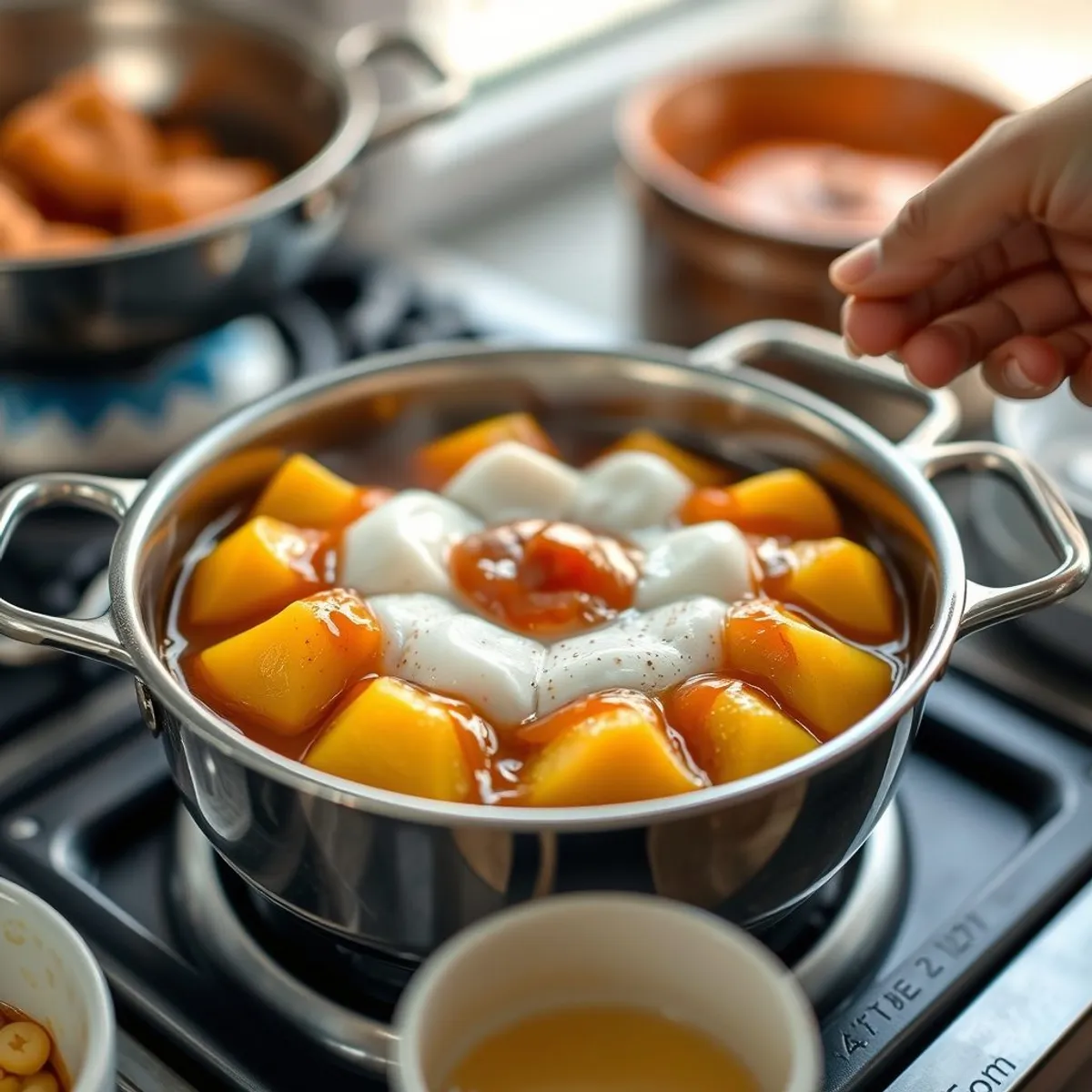
AI-generated photo.
3Cook the aromatics first, then the main ingredient for Halo-halo, until the edges take a little color. A no-cook plate still needs salt and a rest so the dressing soaks in.
Build the base
AI-generated photo.
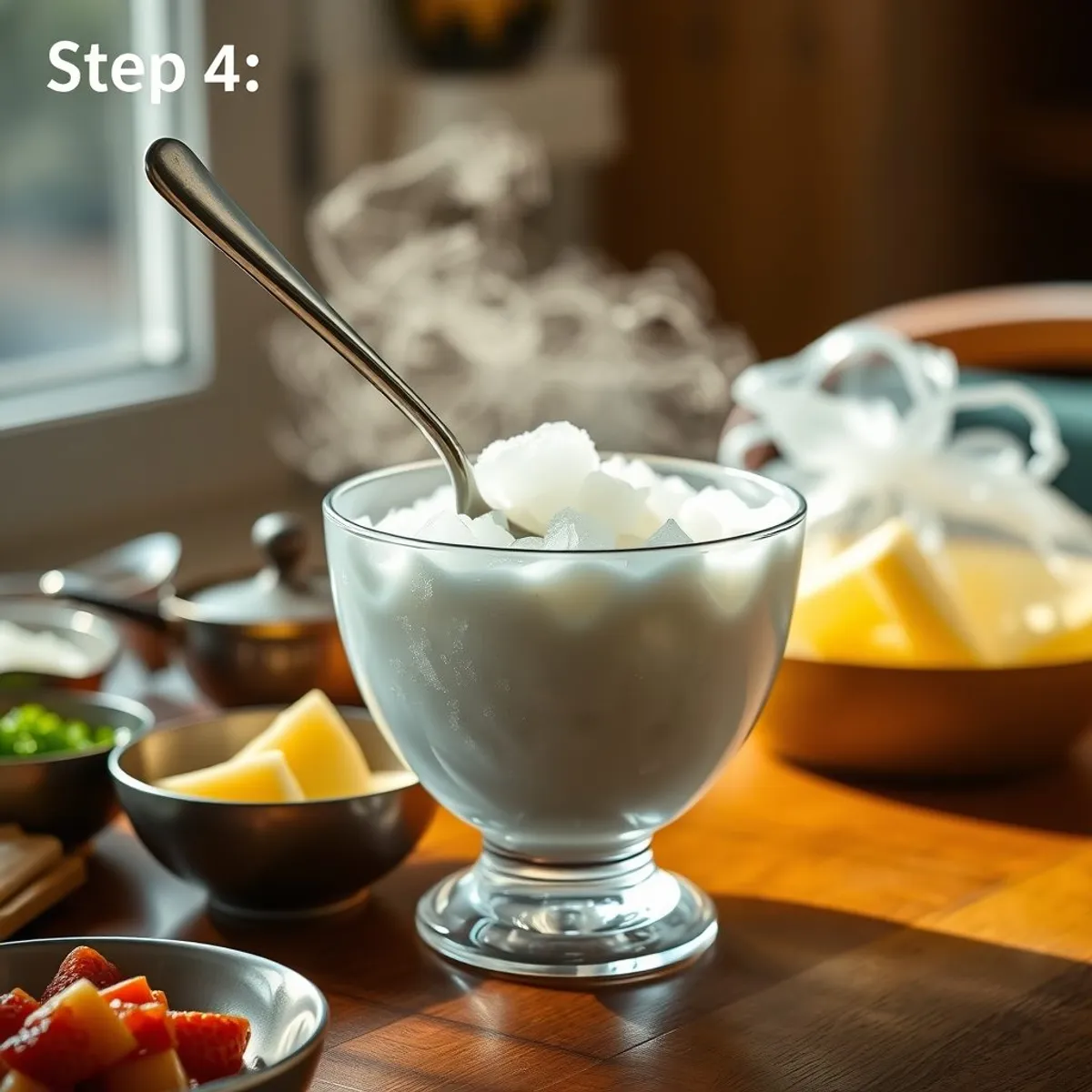
4Add the remaining weighed foods and cook Halo-halo at the refrigerator at 40°F / 4°C. Start checking at 33 minutes. Halo-halo is done when it tastes seasoned after the chill, and the dressing or brine coats every piece.
Chill 33 min
- 🇵🇭 PhilippinesSoutheast Asiaicon-philippines-halo-halo-step-4
Halo-halo, step 5
Step 5 · Halo-halo
5Check the center of Halo-halo, not the edge. If the cue is not true yet, give it a few more minutes and look again. Opening a lid or an oven door early drops the heat.
- 🇵🇭 PhilippinesSoutheast Asiaicon-philippines-halo-halo-step-5
Halo-halo, step 6
Step 6 · Rest 5 min
6Rest Halo-halo for 5 minutes, then taste and adjust the salt. Serve it in the way it is eaten in philippines, with the sauce or garnish that belongs to it. Film Halo-halo in this shot order and no other: a skewer pulled from the center; the fridge shelf where the plate will chill; aromatics softening without color; herbs cut in at the end. Slate words for the editor: quiche, flake, tender, ivory, undercrust, harbor, sable, enamel, ramekin, gloss.
Rest 5 min
How you know it is done
Halo-halo is done when it tastes seasoned after the chill, and the dressing or brine coats every piece.
If it goes wrong
- Halo-halo looks done at the edge and is still raw in the center. Trust the cue, not the color. Check the thickest piece and give it a few more minutes.
- Halo-halo turned out salty, dry, or watery. Weigh the salt and the liquid next time. Keep the heat at the temperature in the method, and stop when the doneness cue appears.
Storage
Cover Halo-halo and refrigerate it the same day. Eat it within 2 days. Do not leave a dressed or creamy cold plate at room temperature.
How this dish helps your daily life
- Halo-halo is one of the plates people ask for by name from Manila.
- Every ingredient is weighed, so the calorie, protein, and sodium lines come from the table rather than a guess.
Notes
Pregnancy. Cook meat, poultry, eggs, and seafood through. Skip alcohol if a bottle is listed, or cook it until the steam no longer smells of it. There is no raw-fish step.
From the kitchen. Sweeten cooked mung bean, then layer it with fruit, ice, and condensed milk. Purple yam is the usual color. Mango and jackfruit carry the fruit here.
Allergens in the required list: Milk.
Your stars and note
Pai shares general nutrition information for everyday cooking. It is not medical advice, a diagnosis, or a treatment plan. Health labels are estimates from reference ingredient data and do not account for your lab results, medications, or how a food is absorbed. If you are pregnant, managing diabetes, cholesterol, an allergy, or any illness, use this as a menu of ideas and follow the clinician who knows you. In an emergency, call local emergency services.